## What This Article Solves for nike Jacket Shipping Cost Verification When you're preparing to ship a nike jacket from China overseas, the most common misjudgment is treating the product page price, the weight after warehouse packaging, and the final payment amount as the same figure. They correspond to product cost, logistics billing, and payment settlement respectively, and must be recorded separately. This article applies to buyers who have already selected the product and are preparing to s
What This Article Solves for nike Jacket Shipping Cost Verification
When you're preparing to ship a nike jacket from China overseas, the most common misjudgment is treating the product page price, the weight after warehouse packaging, and the final payment amount as the same figure. They correspond to product cost, logistics billing, and payment settlement respectively, and must be recorded separately.
This article applies to buyers who have already selected the product and are preparing to submit an international shipping request, but have not yet confirmed the packaging status, billable weight, and fee composition. After reading, you should be able to complete a pre-shipment fee evidence sheet and determine which amounts can be used for budgeting and which still need confirmation from the logistics or shopping agent.
This article does not apply to packages for which a final waybill has been generated, payment has been completed, or customs disputes need to be handled. In such cases, the order, waybill, and destination country official requirements should prevail.📦

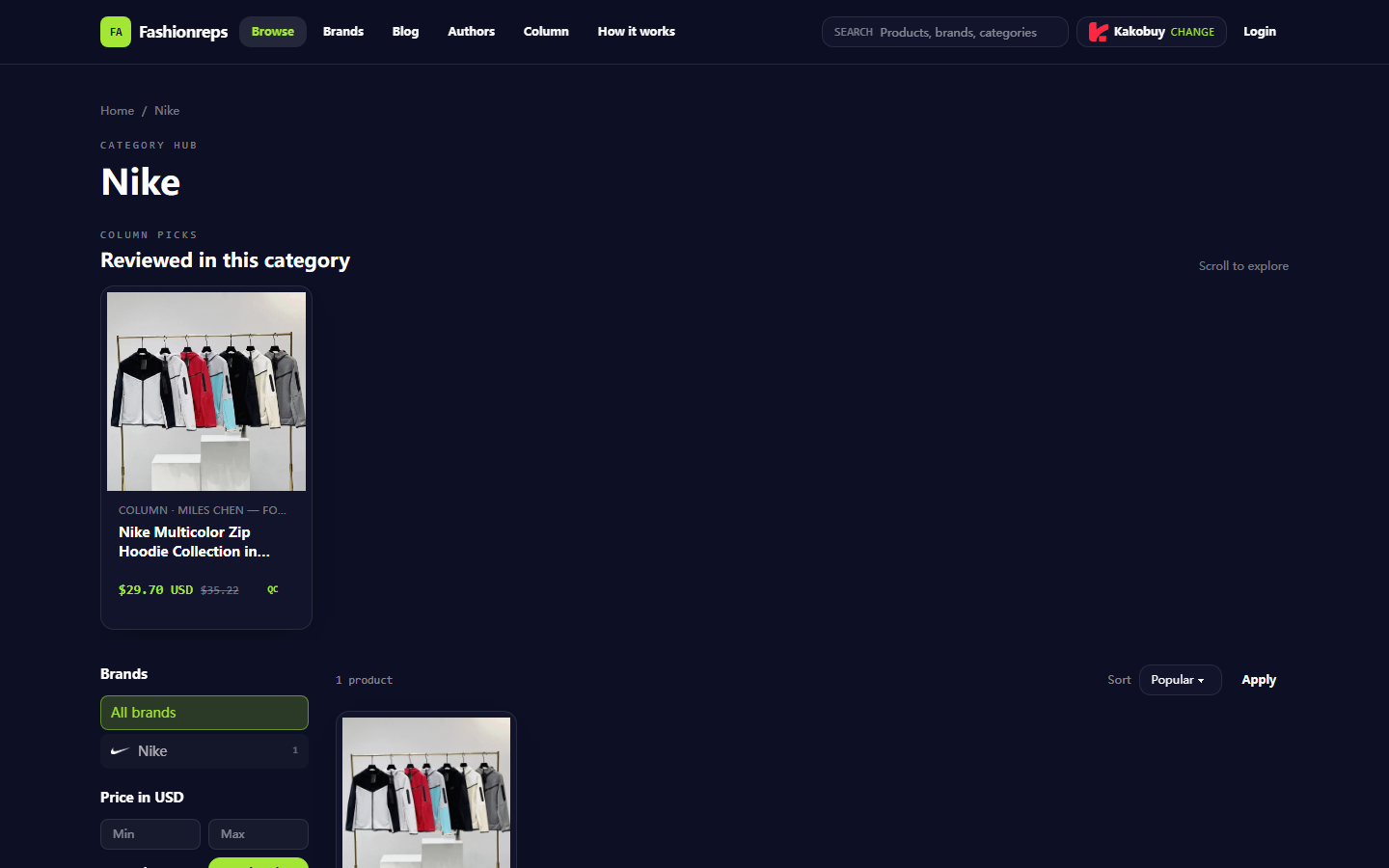
Image: Fashionreps page records for verifying product, packaging, and shipping fee scope. The image only displays page information and does not represent the actual package, physical quality, or final quote.
First Record Product Page, Packaging Status, and Destination Conditions
Fashionreps' pages are designed to help users discover products, view product information, and complete purchases, payments, and shipping through external shopping agents. The page clearly states that orders, payments, and international shipping are handled by the selected agent's website. Therefore, information on Fashionreps product pages cannot directly replace the final fees provided by the agent's warehouse or logistics route.
The verifiable page records show that the Nike category page contains a Nike multicolor zip-up hoodie item entry, displaying the product name, cotton blend description, size range, and reference price in USD. This page record cannot directly prove the stock, packaged weight, logistics cost, or final selling price of a particular nike jacket, so this reference price should not be treated as the determined product amount for this scenario.
Before shipping, establish the following records:
- Product name: Use the full name currently displayed on the product page, not just "nike jacket".
- Product page status: Record whether the page opens normally and has a clear product name and visible product information.
- Product price: Record the currency, page display time, and whether it is marked as a reference price, promotional price, or historical price.
- Destination: At least specify the country or region, and if necessary, add state, province, postal code, and city.
- Package contents: Clearly state the number of jackets, and whether shoe boxes, hangers, extra packaging, or other items are included.
- Logistics inquiry time: Record the date and time of the agent quote or shipping calculator inquiry.
- Currency scope: Confirm whether the page amount is in USD, CNY, EUR, or other currency.
As of October 8, 2026, the page records obtained in this article are insufficient to support a definite shipping cost, tax, or packaging fee for a specific international route. When budgeting, keep the status as "pending agent confirmation" rather than filling in a seemingly precise number yourself.🔎
How to Verify Packaging Dimensions, Actual Weight, and Billable Weight Separately
The logistics billing for a jacket often cannot rely solely on the actual weight of the garment itself. Packaging materials, folding method, outer box dimensions, and route rules can all change the billing result. Buyers should separate the following three concepts:
- Actual weight: The actual weight of the package shown by the weighing equipment.
- Volumetric weight: The weight calculated based on the outer box length, width, height, and route formula.
- Billable weight: The weight ultimately used by the logistics route to calculate the shipping cost. It may take the higher of actual weight and volumetric weight, or use the route's own rounding rules.
Before submitting a shipping request, require the warehouse or agent to clearly return the following information:
- Weight from bare product or warehouse weighing record;
- Which outer packaging is used;
- Packaged length, width, height;
- Actual weight and volumetric weight respectively;
- Which weight the route uses as the billing basis;
- Whether there is a first weight, additional weight, minimum billable weight, or weight rounding;
- Whether reinforcement, shoe box removal, vacuum compression, or repackaging services are included;
- Whether the quote will be adjusted after reweighing, volume recheck, or route review.
If the agent only shows an "estimated weight", do not write it as the final billable weight. A safer way to record is as an "estimated value" and keep the actual value after warehouse reweighing or waybill generation. For soft clothing, compression packaging may reduce volume, but it may also incur additional service fees or affect the product condition; it cannot be assumed to always be cheaper.📏
How to Record Product Cost, Packaging Cost, Service Fee, and Shipping Cost in Separate Columns
The core of fee verification is not to first find a total price, but to confirm which stage each amount belongs to. It is recommended to record in separate columns as follows:
| Fee Item | Evidence to Record | Current Judgment |
|---|---|---|
| Product cost | Currency, unit price, quantity, discount conditions in product page or order | Needs to be based on specific product order |
| Shopping agent service fee | Service item, rate, or fixed charge in agent settlement page | Current page does not provide specific value |
| Packaging or warehousing service fee | Items such as reinforcement, repackaging, consolidation, removal of packaging on warehouse page | Needs to be confirmed based on actual selection |
| International shipping cost | Destination, route, billable weight, billing time, and quote details | Current evidence insufficient, no specific amount output |
| Payment processing fee | Payment method, receiving currency, fee description | Needs to be based on actual payment page or payment institution rules |
| Taxes and customs clearance costs | Destination country rules, declaration documents, carrier or customs notice | Cannot be inferred from product page price |
| Exchange rate impact | Exchange time, rate source, settlement currency | Needs to be rechecked at payment |
If the page only shows a packaged total amount, require the agent to itemize or at least explain which items are included in the total. If it cannot be itemized, save it as an "unitemized quote", but do not judge which item has the highest cost based on it.
Consolidated shipping cannot simply be regarded as a cost-saving solution. It may reduce repeated first weight or operation costs, but may increase volumetric weight, package value, and risk of loss in a single shipment; split shipping may increase fixed costs, but may be suitable when there are route restrictions, declaration restrictions, or different recipients. Whether to consolidate should be calculated based on the weight, dimensions, destination, route rules, and risk tolerance of the same batch of goods.🧾
How to Label Exchange Rate, Payment Fee, and Currency Timestamp
The same order may simultaneously involve product amounts in RMB, reference amounts in USD, agent account balances, and actual bank card charges. To avoid mistaking exchange rate differences for shipping cost changes, record the following in the fee table:
- Original amount and original currency;
- The page or order stage where the amount is displayed;
- Query date and time;
- The conversion currency used;
- Whether the page states that the exchange rate is determined by the agent, payment institution, or bank;
- Whether additional payment processing fees, cross-border fees, or currency conversion fees are charged;
- The final bank posted amount.
Do not just record "approximately how many USD". If the amount has undergone currency conversion, keep the original amount and mark the converted amount as a budget value. After payment is completed, the actual charge shown in the bank card, payment institution, or account statement shall prevail.
This article does not provide any real-time exchange rate or specific route costs, because the current data does not provide a complete quote for the same destination, same billable weight, and same inquiry time. Real-time amounts should be re-queried before submitting the shipping request, and the quote page or order record should be saved.💱
How to Build a Pending Confirmation List When the Page Does Not Show Clear Fees
When the page does not display complete fees, do not substitute amounts from other products, other countries, or old orders. You can organize the questions into a confirmation list to send to the agent or warehouse:
- What is the actual weight of this nike jacket after packaging?
- What are the packaged length, width, and height?
- Does the route charge by actual weight, volumetric weight, or the higher of the two?
- How is the billable weight rounded up?
- Does the quote include fuel surcharge, remote area fee, or other route surcharges?
- Does it include warehousing, reinforcement, repackaging, or consolidation services?
- What taxes, customs clearance fees, or delivery surcharges may arise in the destination country?
- How long is the quote valid, and may it change after reweighing or route review?
- What are the compensation and handling conditions in case of loss, damage, or return?
- Is the currency displayed on the page consistent with the actual payment deduction currency?
If the other party can only answer some questions, keep the unanswered items in the fee evidence sheet and mark the total amount as "not usable for final decision". This is more useful than an unexplained estimated figure.
When Estimated Amounts Cannot Be Treated as Final Quotes
In the following situations, estimated amounts can only be used for rough budgeting:
- The product has not yet been received in the warehouse or the warehouse has not completed reweighing;
- Packaging method has not been determined;
- Destination lacks country, city, or postal code information;
- Route price is still in the calculator estimation stage;
- Product quantity or package contents may change;
- The carrier has not confirmed transportability;
- The quote does not state whether surcharges are included;
- The page shows a historical price, reference price, or promotional price;
- Exchange rate and payment fee have not been locked;
- Destination country taxes, customs documents, or import restrictions have not been confirmed.
In particular, do not understate value, split shipments to avoid taxes, or evade inspection in order to lower the quote. Declaration should be based on true contents and destination country requirements. If the product involves brand, trademark, import restrictions, or carrier restrictions, confirm relevant rules before payment and shipping.
Final Action: Complete Pre-Shipment Fee Evidence Sheet Before Submitting Shipping Request
Before submitting a shipping request, at least keep a record containing the following fields:
- Product name and product page status;
- Product quantity, order amount, and original currency;
- Packaging method, actual weight, dimensions, and billable weight;
- Agent service fee, packaging fee, international shipping fee, and payment fee;
- Destination, inquiry time, and quote validity period;
- Pending confirmation items for taxes, customs, and carrier restrictions;
- Reasons why the estimated total may differ from the final quote;
- Storage location of quote page, order page, or warehouse records.
Check item by item before submission: Can the product page prove what you are buying? Can the warehouse record prove how heavy the package is? Can the quote explain what weight is used for billing? Can the payment page explain the actual deduction currency? Can the destination country requirements support your declaration method? Only when these evidences correspond to each other is the estimated amount suitable as a basis for shipping decisions.
Savings should come from verifiable differences, such as actual quote differences between different packaging methods, different routes, or consolidation plans, rather than experience-based estimates. The corresponding increased risks include higher volumetric weight, concentrated package value, route restrictions, customs complexity, and larger loss per shipment. This verification method is suitable for buyers who already have product page and warehouse records and are willing to confirm fees item by item before submitting shipping; it is not recommended to decide shipping based solely on a total price or other people's old orders without destination, weight, dimensions, and route conditions.
Editorial note: This article was compiled by the Fashionreps Editorial Desk based on visible page information and fee verification methods, and clearly distinguishes page reference information, pending confirmation items, and final quotes. This article does not claim that the editorial team personally purchased, received, wore, or tested the product, nor does it replace the real-time rules of shopping agents, carriers, payment institutions, or destination country authorities.
Frequently Asked Questions About Agent Platform Shopping
1. What does mulebuyus.com mean by QC photos?
Every drop-shipping service, including mulebuyus.com, maintains a specialized quality-control team. When your goods reach the platform's warehouse, the team performs a quality check and captures QC images of your products. Typically three pictures are taken, and the staff confirms that the color, dimensions, specifications, and quantity align with your order. They also look for any defects. Electronic products are an exception, as only their outer appearance is reviewed. If defects or wrong size/color are found, the team immediately arranges a return to the seller, ensuring the products you ultimately receive meet high standards.
2. What should I do if I'm not happy with the items I got from mulebuyus.com?
Reach out to mulebuyus.com's customer service as soon as you can. For most non-specialty items from Chinese sellers, there is a 5-day unconditional return and exchange policy. If you're not satisfied, you may ask for a return. If the item has already left the warehouse and reached your location, and you find a quality problem, you'll need to contact mulebuyus.com's support team so they can assist you in communicating with the seller to work out a compensation arrangement.
Below are the support email addresses for various platforms:
kakobuy: service@kakobuy.com
oopbuy: support01@oopbuy.com
usfans: support@usfans.com
hipobuy: care@hipobuy.com
superbuy: care@superbuy.com
3. Why doesn't mulebuyus.com use Google Sheets?
Google Sheets works well only for spreadsheets with a limited number of products. As the product count grows, loading becomes very slow and the system lags heavily. This problem is worse on mobile devices, where the visual experience is poor and finding specific products is extremely inconvenient. For the same set of items, the website's own spreadsheet loads faster and delivers a better visual experience.
4. Why does mulebuyus.com recommend using spreadsheets?
Agent platforms usually don't show products directly, so you need a spreadsheet to search for items you like and obtain their purchase links. Another option is to ask for help on Reddit or Discord—products suggested there are often excellent, but the buying process can be quite time-consuming. These spreadsheets are generally created over long periods by collecting information from such communities.
Community feedback (5)
Reader score 4.2 / 5 (5 ratings)
- TokyoHaulGuy
Been ordering Nike jackets for two years and still learned something here. The tip about verifying the final payment against the billing weight rather than the product page weight is solid. Shared this with my group chat.
5 / 5- sarahnguyen
Helpful but I still find it confusing. Maybe a simple table comparing the three figures would make it easier for beginners like me. I had to read the middle section twice.
3 / 5- Kev_in_Berlin
Good write-up. One thing I'd add from experience: Nike jackets with stuffing or hoods often gain 200-300g after repackaging. I always ask the agent for a reweigh photo before locking in the shipping line. Saves a lot of back-and-forth.
4 / 5- ldn_drops
finally someone explains the three numbers clearly. product price, billed weight, payment total. I used to just look at the final amount and assume it was all correct. bookmarking this for my next jacket order.
5 / 5- MarcusT_88
This is exactly what tripped me up on my first Nike jacket haul. I thought the 480g listed on the product page was the billed weight, but after warehouse packaging it came out to 720g. That jump changed my shipping line from a cheap option to a more expensive one. Wish I'd known to check the packaged weight separately before paying.
4 / 5
Keep reading on this site
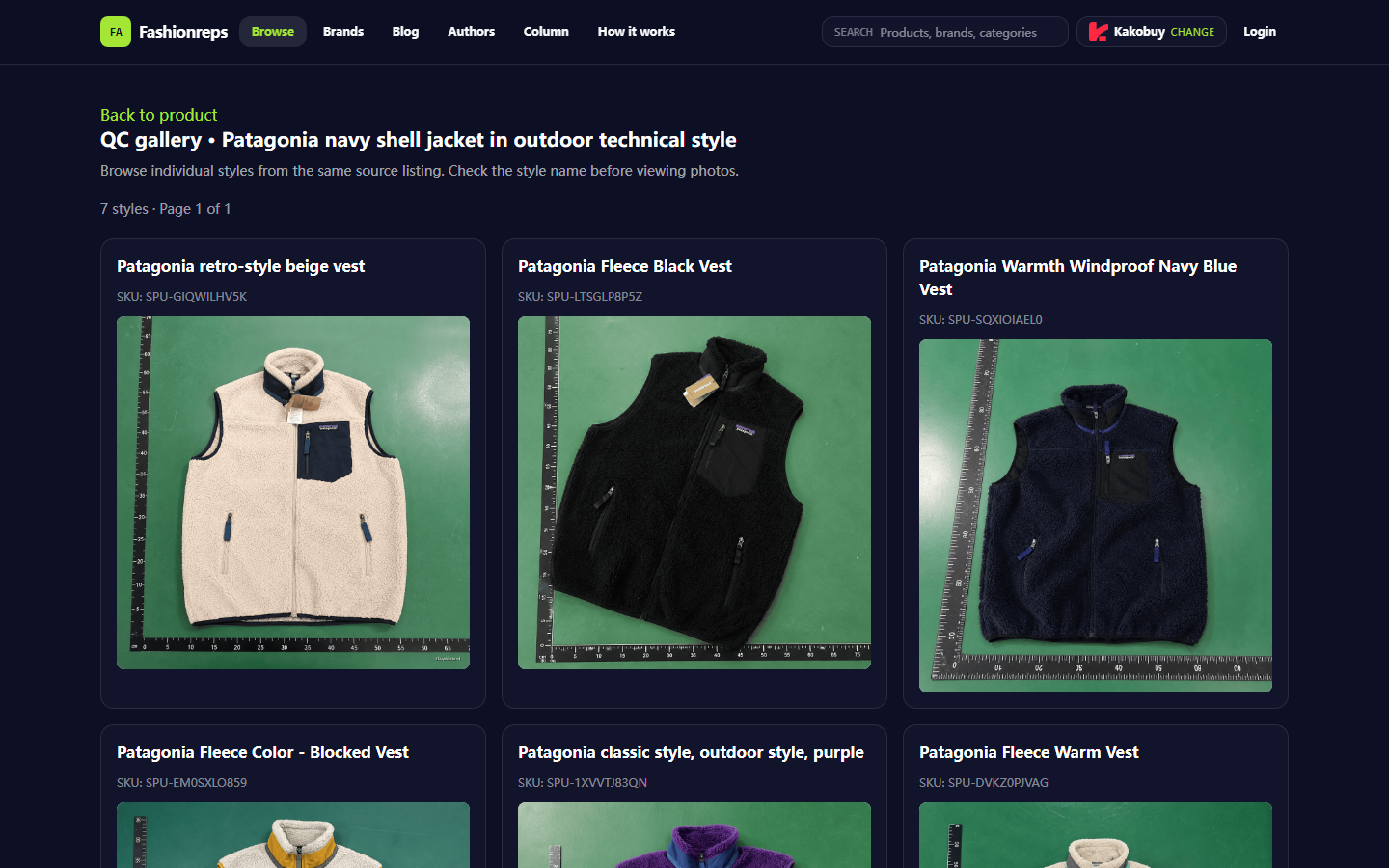
Patagonia Jacket: Split Costs & Verify Savings Before Order
## Defining Cost Decisions and Savings Boundaries for Patagonia Fall/Winter Jackets If you're planning to find a [Patagonia](https://fashion-reps.net/brand/patagonia) fall/winter jacket through a fashion-reps page, the first issue you need to solve isn't "which ordering method is cheapest," but whether you can compare the product price, agent service fee, payment fee, packaging fee, international shipping, exchange rate, and possible taxes under the same calculation framework. 🧾 This article ha
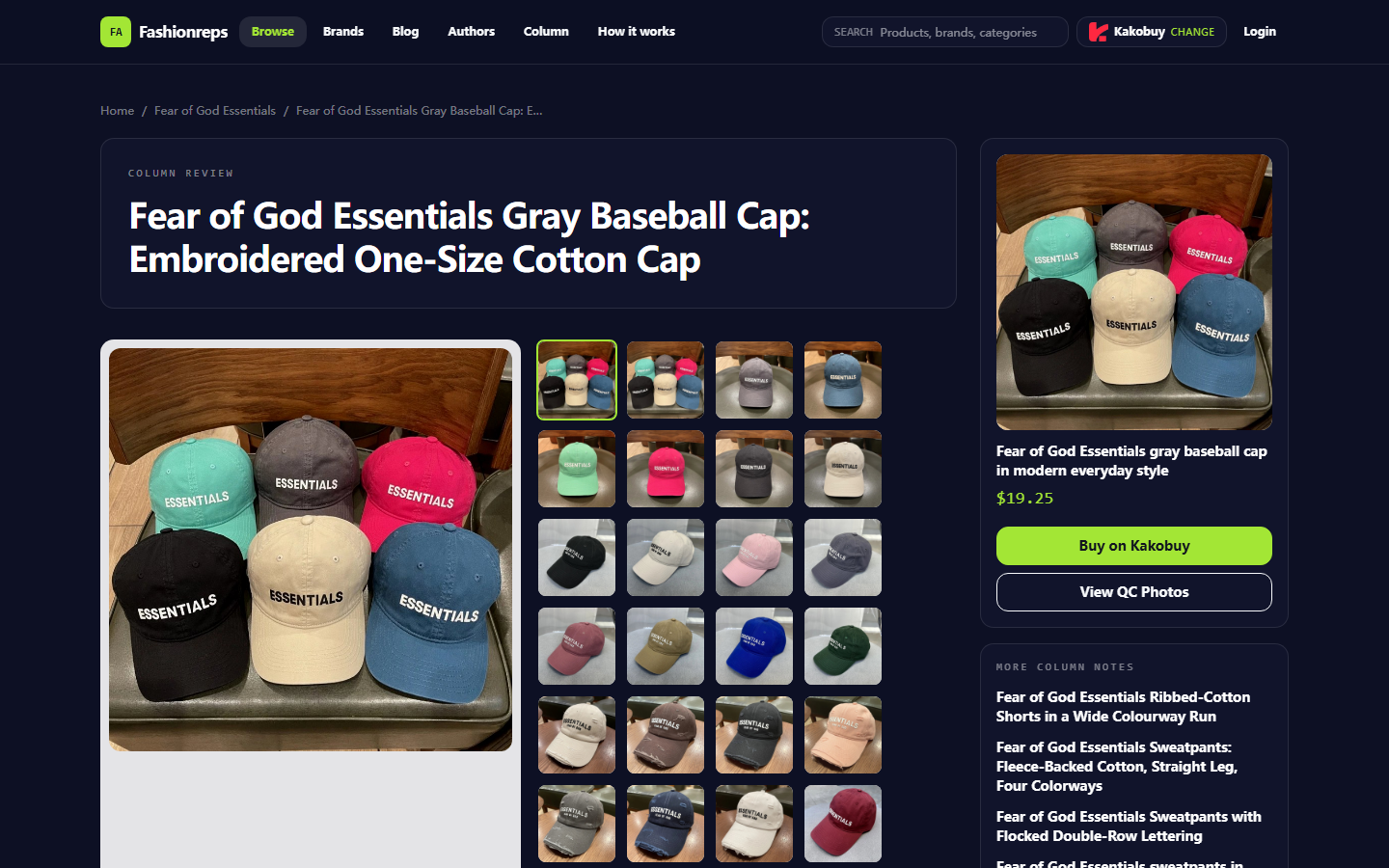
Fear of God Essentials Hoodie Review: Fit, Sizing & Checks
Introduction If you're judging whether a [Fear of God Essentials](https://fashion-reps.net/brand/fear-of-god-essentials) fall/winter hoodie is worth ordering on fashion-reps, the first thing to solve isn't "does it look similar," but whether the page evidence truly corresponds to this hoodie. The actionable goal of this article is: complete product page checks, organize fit and sizing evidence, distinguish the proof scope of page specs and QC photos, and stop ordering in time when information is
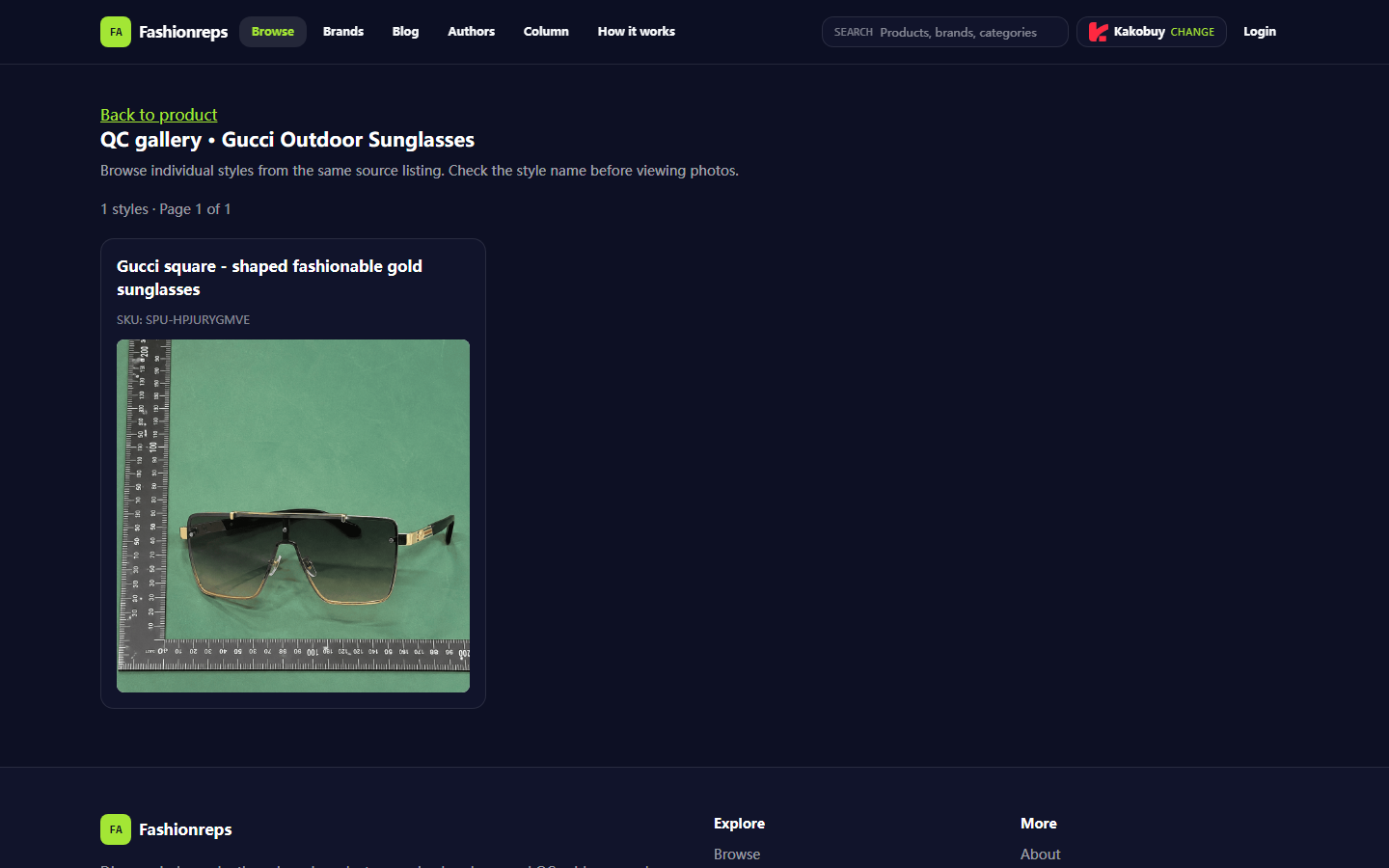
Verify Gucci Sunglasses Coupon on fashionreps
## Clarifying the Checkout Problem That Verifying a gucci Sunglasses Coupon Solves When buying [gucci sunglasses](https://fashion-reps.net/accessories/sunglasses/gucci), whether a coupon can be used cannot be determined solely by the discount percentage shown on the promotional page. What truly needs to be confirmed is: whether this coupon applies to the current item, current variant, current purchasing platform, and current order amount, and whether the discount will be correctly reflected befo