Before consolidating parcels, what you really need to verify is not a seemingly cheap shipping quote, but the complete cost of the same batch of [lacoste](https://fashion-reps.net/brand/lacoste) [scarves](https://fashion-reps.net/accessories/scarves) from the product page to final receipt. This article handles only one specific task: between fashion-reps data and external shopping agent quotes, separately record product, packaging, service fees, payment fees, international shipping, exchange rat
Before consolidating parcels, what you really need to verify is not a seemingly cheap shipping quote, but the complete cost of the same batch of lacoste scarves from the product page to final receipt. This article handles only one specific task: between fashion-reps data and external shopping agent quotes, separately record product, packaging, service fees, payment fees, international shipping, exchange rates, and possible taxes, then decide whether to consolidate, split, or delay shipment.
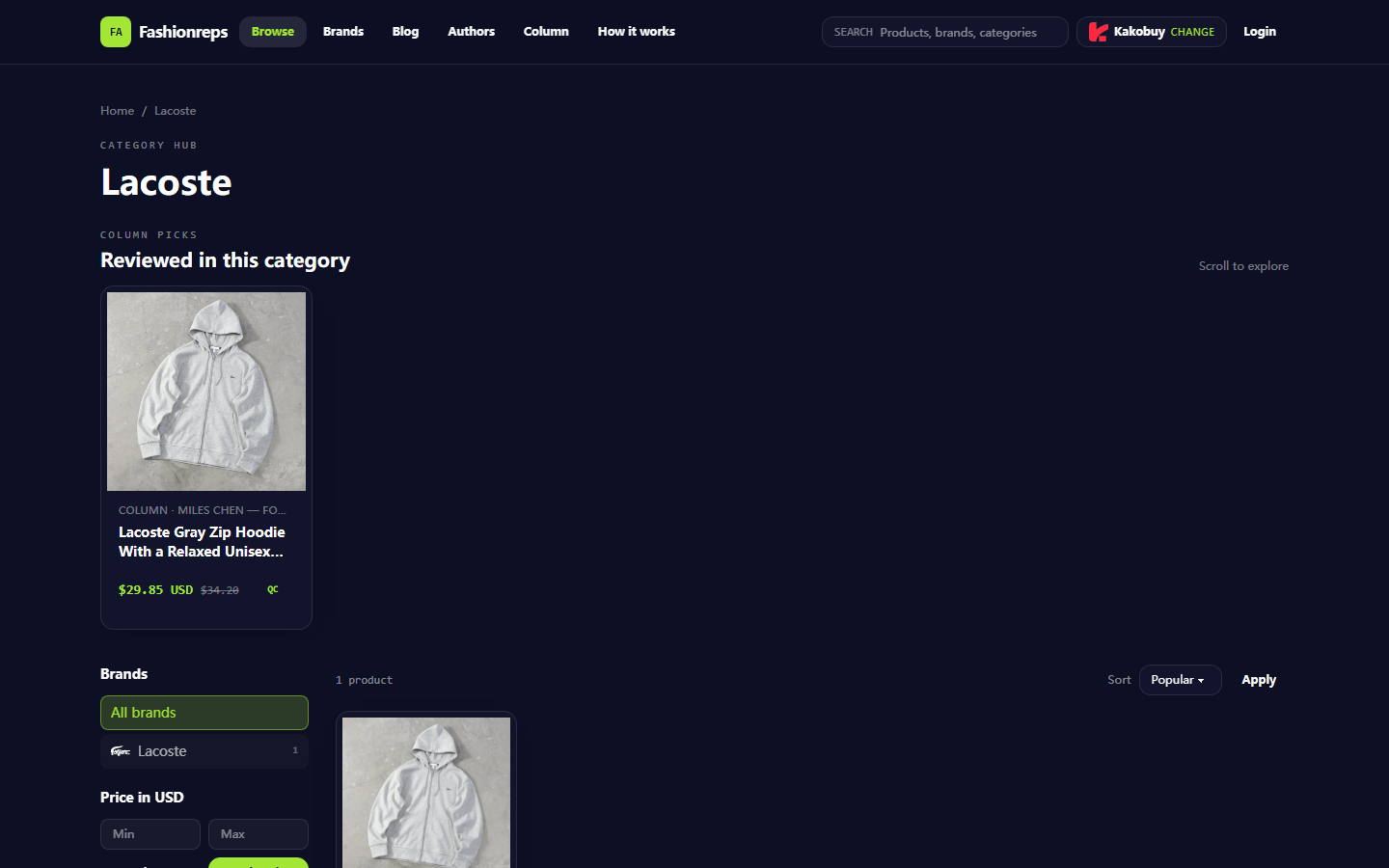
This article's verification date: October 12, 2026. The currently provided fashion-reps page data shows that the visible item in the Lacoste category is a gray zip-up hoodie with a reference price of 29.85 USD, and the page does not provide a lacoste scarf product record usable for this article. Therefore, this article does not treat the hoodie price as the scarf price, nor does it fabricate the scarf's style, inventory, size, material, or discounts. 🧾
Defining the Single Cost Task for Consolidating lacoste Scarves
Before consolidating, the question to answer is: is it more suitable for the current order conditions to put already confirmed purchasable lacoste scarves into the same parcel than to ship them separately?
After reading this article, you should be able to do three things:
- Create independent product and size records for each scarf.
- Separate agent service, packaging, payment, shipping, and exchange rate impacts.
- Compare separate parcels, consolidated parcels, and delayed shipment using the same set of evidence.
This article does not apply to the following scenarios: the product page cannot be opened, only tags without specific product information, scarf inventory not yet confirmed, external agent has not provided billing basis, or destination country import restrictions are unclear. In these cases, information should be completed first, not estimated based on experience.
Recording Style, Color, and Quantity from the Current fashion-reps Page
For each scarf, save the product page name, product page URL, seller or source, color, size or length, quantity, listed item amount, discount terms, inventory status, and recording time. Do not consider a page as a valid product page if it redirects, shows 404, only has category tags, or lacks a clear product name and sufficient purchase information.
The provided page data cannot prove the existence of a lacoste scarf product usable for accounting. The page shows a Lacoste gray zip-up hoodie with a reference price of 29.85 USD; this data can only serve as a category page record and cannot be used to derive the scarf price. If a specific scarf page is found later, record it anew, not using the hoodie's amount.
Product record recommendations at minimum:
- Product name and specific style
- Color, size, or actual length
- Unit price, quantity, and page discounts
- Page displayed inventory or purchase status
- Product page verification date
- Screenshot or saved page evidence
The fashion-reps page states that the buy button directs to the user's chosen shopping agent; orders, payment, and international shipping are handled by the agent website. Therefore, product discovery information on fashion-reps and the agent's final quote must be kept separate, and the category page reference price cannot be used as the payment amount. 🔎

Figure: The provided Lacoste category page data. The visible item is a hoodie, insufficient to prove lacoste scarf price or inventory.
Verifying Scarf Dimensions, Packaging, and Parcel Consolidation Conditions
Before consolidating, have the agent confirm each scarf's item packaging condition and the dimensions and weight after removing or keeping original packaging. Scarves may be folded, compressed, or placed in different protective materials, but you cannot assume compression always reduces chargeable weight, nor can you assume removing packaging does not affect after-sales or shipping protection.
Fields to confirm with the agent include:
- Actual weight of a single scarf
- Length, width, and height of a single scarf with packaging
- Combined actual weight and outer box dimensions after consolidating multiple items
- Whether billing is by actual weight, volumetric weight, or the higher of the two
- Whether repacking, reinforcement, moisture-proofing, or photography services are available
- Whether route restrictions, prohibited materials, or quantity limits exist
- Whether re-weighing and re-quoting are required after consolidation
Do not just record "consolidating a few scarves." Keep two sets of data (before and after consolidation) because parcel dimensions may change volumetric weight, and added packaging reinforcement may increase weight. 📦
Separately Recording Product Amount, Service Fees, Payment Fees, and Packaging Fees
Total cost should be broken down by stage, not combined into one "estimated shipping." Suggested calculation structure:
Product subtotal = confirmed product price per item × quantity − applicable and clearly stated discounts
Domestic handling = agent service fee + payment fee + warehousing/inspection fee + repacking fee + other clearly stated service fees
International shipping = route base freight + weight or volume surcharge + insurance or value-added service fee
Landed cost = product subtotal + domestic handling + international shipping + actual destination country taxes or customs clearance fees
These formulas only show the recording relationship, not that current orders have specific amounts. When agent quotes, chargeable weight, exchange rates, or tax conditions are missing, mark that field as "to be confirmed," not zero, nor substitute with quotes for other products.
| Cost field | Evidence that must be recorded | What cannot be directly inferred |
|---|---|---|
| Product amount | Specific product page, currency, quantity, verification date | Scarf price cannot be derived from hoodie price |
| Discount amount | Discount rules, applicable products, validity period | Page displaying old reference price does not equal current discount |
| Service and payment fees | Agent quote sheet or checkout page | Rates from different agents are not interchangeable |
| Packaging fees | Packaging plan, whether re-weighed | Consolidation may not be free |
| International shipping | Route, destination country, billing basis, quote date | Different weight brackets cannot be linearly extrapolated |
| Taxes and customs | Destination country rules, declaration documents, and actual bill | Cannot guarantee tax exemption or fixed amount |
Using Verifiable Official Calculators to Confirm Route and Billing Basis
International shipping should be based on the actual selected shopping agent or carrier official calculator, checkout page, or formal quote. Before entering, confirm destination country, postal code, number of parcels, actual weight, length, width, height, declared value, and service options are accurate.
When checking calculator results, save at least:
- Calculator or quote page name
- Destination country and region
- Route name
- Weight and dimension inputs
- Billing method
- Currency and exchange rate source
- Quote generation time
- Whether fuel, remote area, insurance, or other surcharges are included
If the calculator only shows a range, do not write the lower end of the range as the final cost. If the agent requires re-weighing after warehousing, mark the current result as an estimated quote. When quotes change, keep old records and note old/new times to avoid reusing outdated numbers.
If currency conversion is needed, save the original currency amount, exchange rate used, rate date, and conversion result. Do not mistake exchange rate fluctuations for shipping discounts. 💱
Evidence Fields Needed to Compare Separate and Consolidated Parcels
Comparison should use the same destination country, same currency, similar declaration conditions, and same service scope. The total for separate parcels should be calculated individually, then compared with the consolidated parcel quote.
Consolidation may reduce duplicate fixed handling fees or first weight charges, but it may also increase volumetric weight, parcel declared value, and one-time loss risk. Splitting may incur multiple fixed fees but might avoid route restrictions, size limits, or per-parcel value limits. Without actual weighing, dimensions, and quotes, you cannot claim which option is always cheaper.
Comparison record should include:
- Number of parcels for separate shipping
- Actual weight and volumetric weight of each parcel
- Packaging and handling fees for each parcel
- Total weight and outer box dimensions after consolidation
- Route, transit time, and insurance conditions for both options
- Possible tax or customs clearance differences
- Impact on loss, damage, and after-sales processing
Final judgment should look at complete landed cost and risk, not just the international shipping shown on the web page. If consolidation only saves fixed handling fees but significantly increases chargeable weight or single-loss risk, consolidation may not be suitable for the current order.
Marking Unknown Information: Exchange Rate, Taxes, Transit Time, and Quote Date
If the following information lacks a source, mark it separately as unknown:
- Whether the product is still in stock
- Whether the product page price is still valid
- Whether discounts apply to the current quantity
- Agent service fees and payment rates
- Whether packaging is charged
- Final chargeable weight and volumetric weight
- Whether the route accepts the item and destination
- Estimated transit time
- Destination country taxes, customs fees, or import restrictions
- Exchange rate and validity period used in the quote
Customs and taxes should be truthfully declared according to destination country regulations, and necessary documentation prepared. Do not create "savings" by under-declaring, splitting to avoid taxes, or evading inspection. If the agent or carrier has not clearly stated who bears taxes, keep that risk in the total cost judgment rather than assuming the route covers it.
Using a Unified Record Table to Decide Consolidation, Splitting, or Delay
Follow this order for decisions:
- First confirm each scarf has a valid product page, clear name, and verifiable amount.
- Then confirm quantity, inventory, size, packaging condition, and actual weight.
- Obtain formal quotes separately for separate and consolidated parcels.
- Convert currencies uniformly and record the exchange rate date.
- Fill in service fees, payment fees, packaging fees, insurance, and possible taxes.
- Compare total cost, transit time, route restrictions, and one-time loss risk.
- Confirm consolidation only when key fields are complete and conditions apply.
Consolidation is more suitable when: the combined dimensions after packaging do not trigger a higher billing bracket, the route allows consolidation, savings from reduced fixed handling fees offset added packaging or volumetric weight costs, and you can accept the risk of multiple items in one parcel.
Splitting is more suitable when: consolidation moves into a higher billing bracket, route or declaration restrictions exist, risk rises significantly when item value is concentrated, or different products have different after-sales, insurance, and transit time requirements.
Delaying shipment is more suitable when: key gaps remain in scarf product page, inventory, final weighing, agent quote, exchange rate, destination country rules, or tax responsibility.
The conclusion must clearly state four things: which fixed fee the expected savings come from, what type of weight, tax, or loss risk may increase, which order type is suitable, and under what conditions consolidation is not recommended. Current data does not provide valid lacoste scarf product prices, packaging data, or agent shipping quotes, so specific savings cannot be calculated, nor can a conclusion that consolidation is cheaper be given.
Agent Platform Shopping FAQ
1. What exactly are QC photos on hipobuy-sheet.com?
hipobuy-sheet.com has a professional quality inspection team, standard for all dropshipping platforms. When your items arrive at the hipobuy-sheet.com warehouse, the platform performs quality checks and takes QC photos. Typically three photos are taken, and the team verifies the item's color, size, specifications, and quantity against your order, while also checking for quality issues. However, electronic products are excluded, with only appearance checks. If quality issues or size/color errors are found, the team immediately requests a return from the seller, ensuring you receive high-quality products.
2. Why use spreadsheets on hipobuy-sheet.com?
Shopping agent platforms generally do not display products directly, so you need spreadsheets to search for desired items and obtain purchase links. Alternatively, you can seek help on Reddit or Discord — products recommended there are often excellent, but the shopping process can be quite slow. These spreadsheets are typically compiled from long-term information collected from these platforms.
Community feedback (0)
- No approved reviews yet.
- Keep in touch
Keep reading on this site
Patagonia Jacket: Split Costs & Verify Savings Before Order
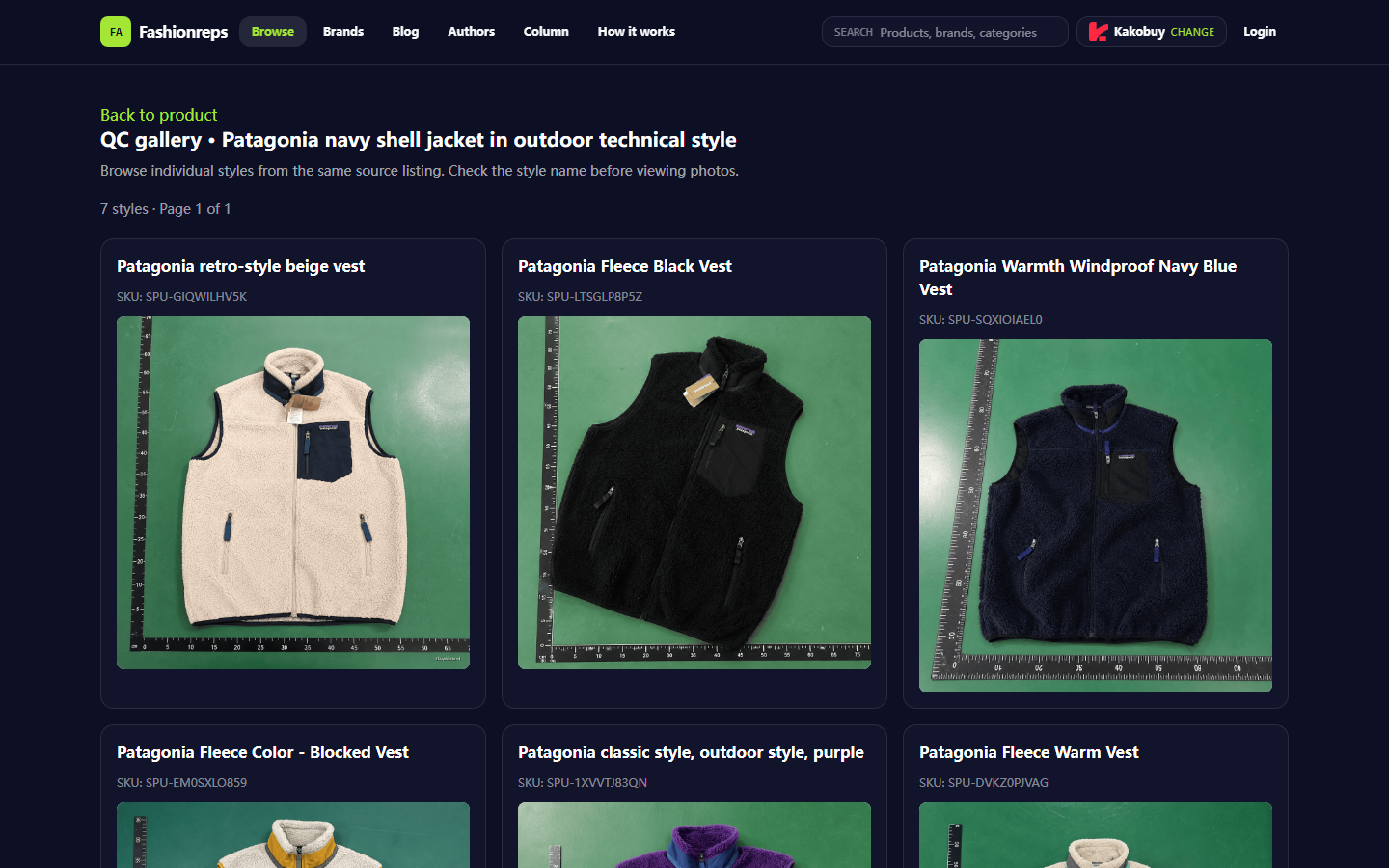
## Defining Cost Decisions and Savings Boundaries for Patagonia Fall/Winter Jackets If you're planning to find a [Patagonia](https://fashion-reps.net/brand/patagonia) fall/winter jacket through a fashion-reps page, the first issue you need to solve isn't "which ordering method is cheapest," but whether you can compare the product price, agent service fee, payment fee, packaging fee, international shipping, exchange rate, and possible taxes under the same calculation framework. 🧾 This article ha
Fear of God Essentials Hoodie Review: Fit, Sizing & Checks
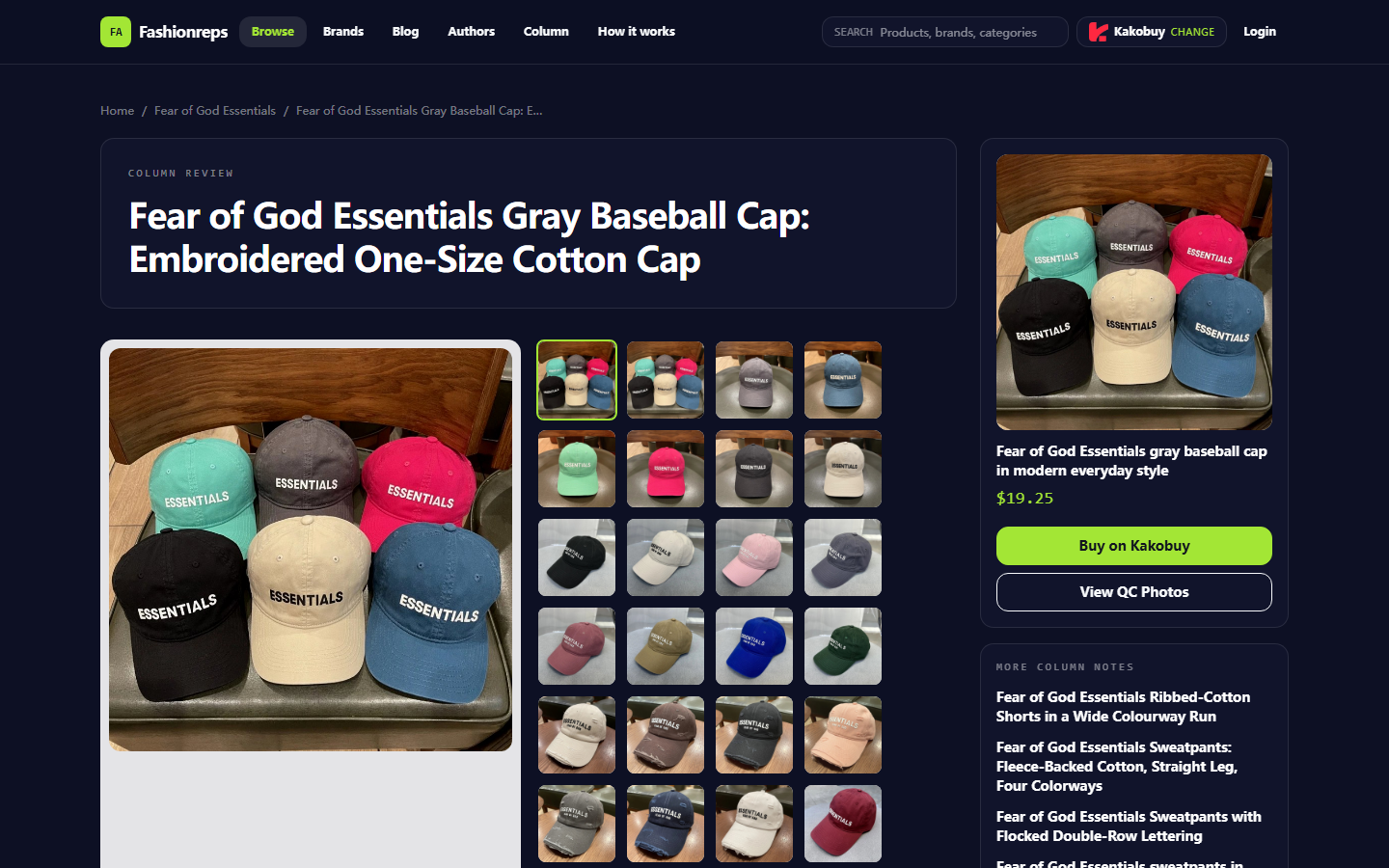
Introduction If you're judging whether a [Fear of God Essentials](https://fashion-reps.net/brand/fear-of-god-essentials) fall/winter hoodie is worth ordering on fashion-reps, the first thing to solve isn't "does it look similar," but whether the page evidence truly corresponds to this hoodie. The actionable goal of this article is: complete product page checks, organize fit and sizing evidence, distinguish the proof scope of page specs and QC photos, and stop ordering in time when information is
Verify Gucci Sunglasses Coupon on fashionreps
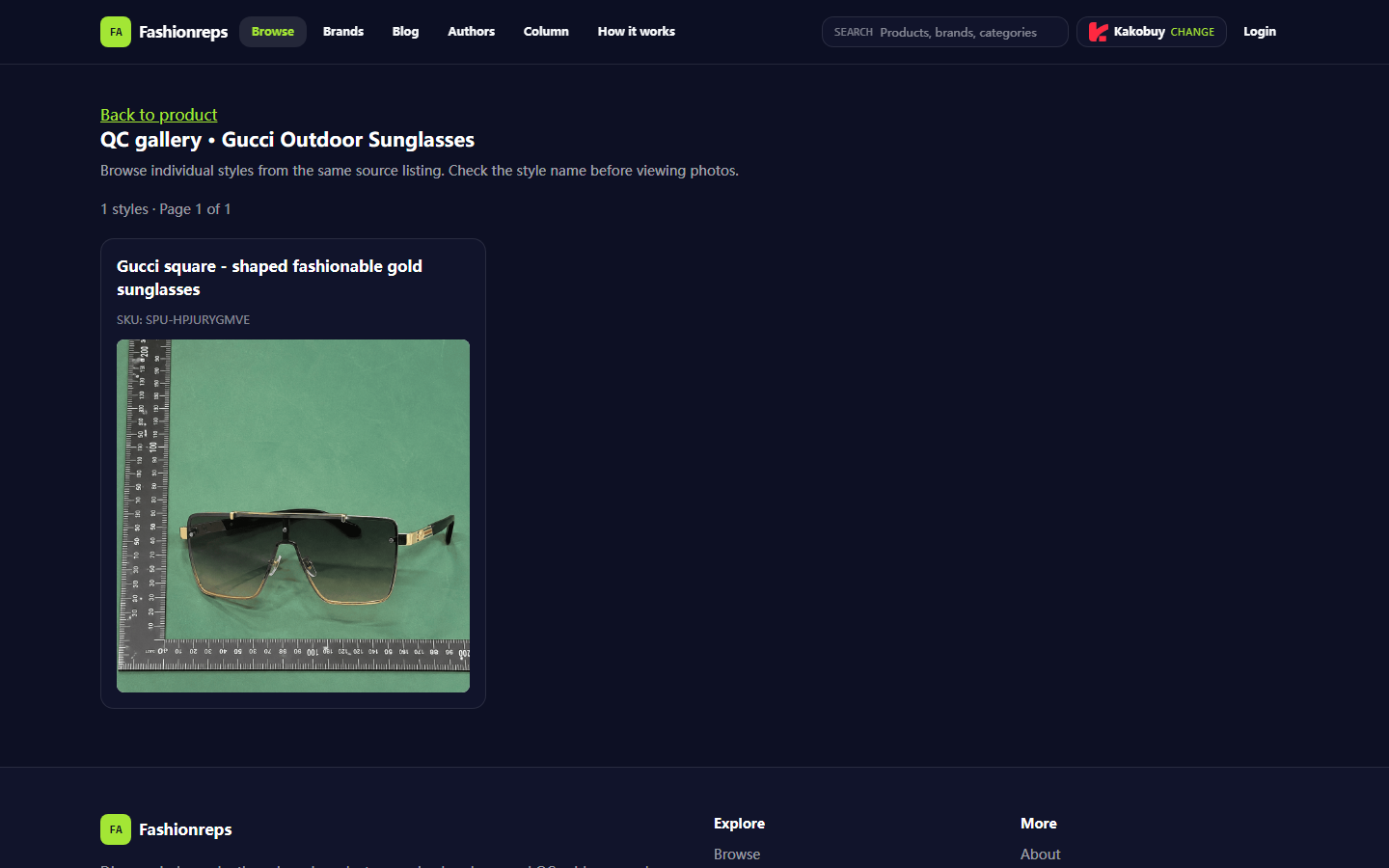
## Clarifying the Checkout Problem That Verifying a gucci Sunglasses Coupon Solves When buying [gucci sunglasses](https://fashion-reps.net/accessories/sunglasses/gucci), whether a coupon can be used cannot be determined solely by the discount percentage shown on the promotional page. What truly needs to be confirmed is: whether this coupon applies to the current item, current variant, current purchasing platform, and current order amount, and whether the discount will be correctly reflected befo